I've been working on a project recently (more details will come when/if it really develops into something), and one of the little obsessions I got caught in was making a goofy little chart to keep the main leftist tendencies clear and to help newcomers quickly find where they might want to first explore. All the little decisions really sucked me in, so I thought I should share. Let me know what you think!
Click here to view the chart.

Showing posts with label anarchist. Show all posts
Showing posts with label anarchist. Show all posts
Tuesday, December 2, 2014

Friday, October 24, 2014
Profile: David Graeber
 David Graeber is one of the most popular radical leftists alive today. Through his incredibly popular work Debt: The First 5000 Years and his fundamental role in organizing the Occupy Wall Street movement, Graeber has become a leading voice for libertarian socialist thought. He teaches at the London School of Economics.
The reason that economic textbooks now begin with imaginary villages is because it has been impossible to talk about real ones. Even some economists have been forced to admit that Smith's Land of Barter doesn't really exist.
The question is why the myth is perpetuated anyway. -- David Graeber, Debt: The First 5000 YearsPDF's of David Graeber
Video of David Graeber
Sunday, October 12, 2014
Some Material on Leftist Perspectives of ISIS
Meanwhile a major barrier to the spread of the ISIS plague to Lebanon is Hezbollah, a hated enemy of the US and its Israeli ally. And to complicate the situation further, the US and Iran now share a justified concern about the rise of the Islamic State, as do others in this highly conflicted region. -- Noam Chomsky, ISIS and Our TimesSo ISIS (the Islamic State of Iraq and Syria, also known as ISIL and IS) has been capturing headlines as it continues to wage its reactionary, islamo-fascist war. Now that radical left groups in the region are making great strides in fighting ISIS, and now that these groups might be getting help from NATO, another reactionary force that could eliminate the leftist groups as well, it seems a great time to understand the situation and figure out how we support the fight against both islamo-fascists and imperialists.
 |
| The radical left PKK anti-ISIS fighters. |
What Is Anarcho-Syndicalism?
They have taken untold millions that they never toiled to earnThe Union Makes Us Strong
But without our brain and muscle not a single wheel can turn
We can break their haughty power, gain our freedom when we learn that
The union makes us strong -- Solidarity Forever, lyrics by Ralph Chaplin
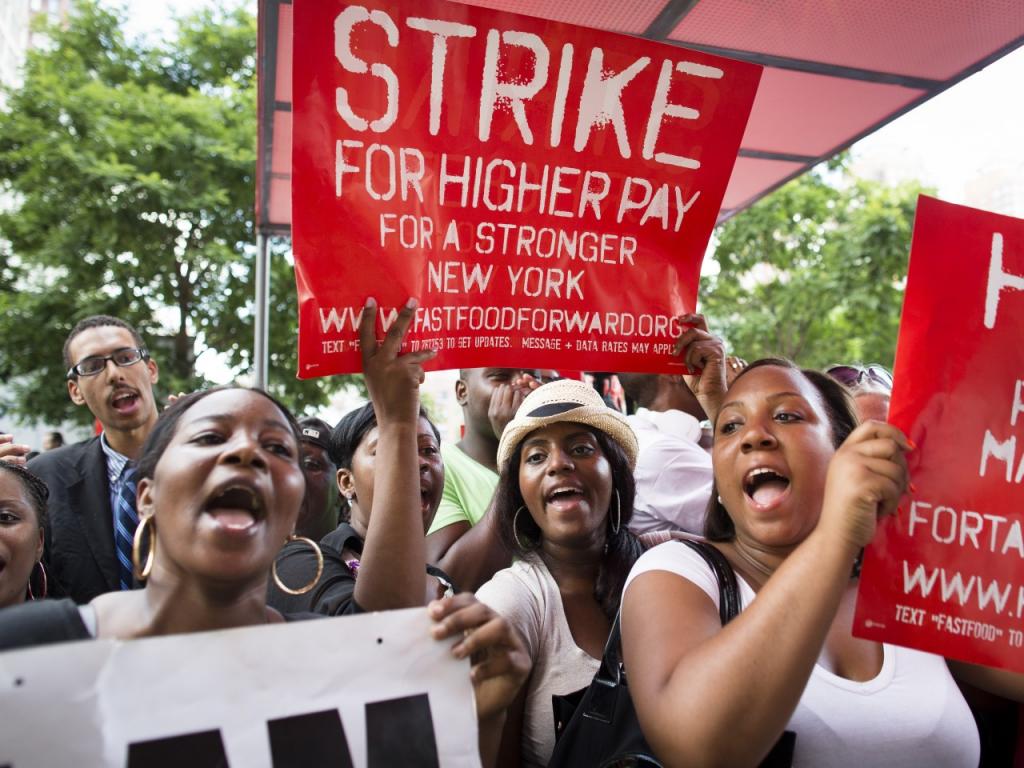 Anarcho-syndicalism calls for an anarchist revolution built around left-wing labor unions that will organize the economy through democracy after the overthrow of capitalism. "Syndicalism" by itself is a group of economic theories that advocate labor union organization of an economy, but "anarcho-syndicalism" specifically calls for the immediate overthrow of the state and the wage system.
Historically, anarcho-syndicalism has been the most powerful of all anarchist traditions. It was central to the anarchist zones that flourished during the Spanish Revolution before being crushed by fascists (and Stalinists). Anarcho-syndicalism is the central ideology of the Industrial Workers of the World and was a popular strain in the U.S. during the Great Depression, helping popularize such heroes as Eugene V Debs and Emma Goldman. World-renowned linguist and political activist Noam Chomsky is a well-known anarcho-syndicalist.
Practically every building of any size had been seized by the workers and was draped with red flags or with the red and black flag of the Anarchists; every wall was scrawled with the hammer and sickle and with the initials of the revolutionary parties[...] Every shop and café had an inscription saying that it had been collectivized[...] Waiters and shop-walkers looked you in the face and treated you as an equal. Servile and even ceremonial forms of speech had temporarily disappeared. -- George Orwell, Homage to Catalonia
 So How Does It Work?
Anarcho-syndicalism uses labor unions to organize a revolution, building the revolutionary consciousness of the workers, bringing them together, and building solidarity with the workers of the world by unifying them to fight for their interests while capitalism still exists.
Once a revolutionary period occurs, the unions are ready to act. The strength of this idea showed itself in the Spanish Revolution. Because the anarcho-syndicalists had already been making decisions democratically and organizing the overthrow private property and the wage system, they were able to quickly overtake the economy and run it democratically. While the figures are hard to pin down, the local records suggest that productivity rose sharply under anarcho-syndicalism.
Anarcho-syndicalism believes that after the revolution, worker and general citizen unions become the decision making groups in society. These groups elect delegates (always able to be recalled) who help organize the society at large.
Wildcat Strikes: the Fight for Good Unions

So maybe you think unions are just corrupt, greedy clubs ran by mobsters, and maybe you think that isn't the best group to lead a revolution. Anarcho-syndicalists are not naive, they know that most unions are not capable or willing to lead revolutions, and that is what led to Wildcat strikes.
A "Wildcat strike" is a strike action by unionized workers who plan, organize, and lead the strike on their own, without the union bosses. This accomplishes several things all at once: it improves worker conditions when the strike succeeds, it puts power in the hands of the workers, it shows the uselessness of union bosses, and it makes for good practice in group decision making and solidarity.
Further Reading:
Tuesday, October 7, 2014
Theism and the Radical Left
Isn't the Radical Left Atheist?
A common misconception of communists and anarchists is that we are all atheists (maybe even hateful to theist beliefs). While most leftists are secularists, wanting the religious faiths to be separate from governing all of society (certainly the state), we are not all atheists. Like the anarchist Leo Tolstoy, many of the most respected and well loved figures on the left came to the ideas of liberation through their religious faith.
That being said, many leftists have been outspoken against religion, and leftists have made some of the strongest critiques of religion that exist. As with many things, we are not all the same. Below are some leftists of religious backgrounds, as well as a round up of some leftist critiques of religion, as well as a clarification of Marx's famous "opiate of the masses" line.
Liberation Theology

Liberation theology is a religious (mainly Catholic) and political doctrine advocating socialist (in
some cases social democratic) transformation of society, and it does so from an imperative to help the poor and the suffering as taught in the Christian Bible. The Catholic church has officially dismissed the theology, but this has not stopped its influence in world events.
Especially in South America since the mid-20th century, religious people have made up a large portion of leftist revolutionary movements and resistance against imperialism and fascism.
Famous Leftists from the Civil Rights Era
The Civil Rights Era was not only a victory for justice, it started among radical left circles in the United States. From the movement came many prominent religious leaders whose political ideals fall on the left. The two most notable names are Martin Luther King, Jr and Malcolm X.
Martin Luther King, Jr. was not only religious, he was a Baptist preacher. By the end of his life, MLK considered economic oppression to be the root of the evil he saw in society, and he was organizing the Poor People's Campaign to bring about a (peaceful) revolution towards socialism.

Religion in Really Existing Socialism
The treatment of religious institutions under really existing socialism has given many people the idea that the left is inherently against religion. Much of the thought behind the secularization of many of these states involved promoting materialist philosophy and socializing the great wealth of many churches.
Marxism and Religion
A lot of anti-left propaganda likes to say that we are all atheists, and much of this comes down to the famous quote of Karl Marx:
So while Marxists are all atheists, not all leftists (or communists) are Marxists.
Note: if anyone has a good place to point me to find radical leftists in other religions (I'm certain of many brave Muslim leftists) please message me.
A common misconception of communists and anarchists is that we are all atheists (maybe even hateful to theist beliefs). While most leftists are secularists, wanting the religious faiths to be separate from governing all of society (certainly the state), we are not all atheists. Like the anarchist Leo Tolstoy, many of the most respected and well loved figures on the left came to the ideas of liberation through their religious faith.
That being said, many leftists have been outspoken against religion, and leftists have made some of the strongest critiques of religion that exist. As with many things, we are not all the same. Below are some leftists of religious backgrounds, as well as a round up of some leftist critiques of religion, as well as a clarification of Marx's famous "opiate of the masses" line.
Liberation Theology

Liberation theology is a religious (mainly Catholic) and political doctrine advocating socialist (in
some cases social democratic) transformation of society, and it does so from an imperative to help the poor and the suffering as taught in the Christian Bible. The Catholic church has officially dismissed the theology, but this has not stopped its influence in world events.
Especially in South America since the mid-20th century, religious people have made up a large portion of leftist revolutionary movements and resistance against imperialism and fascism.
Famous Leftists from the Civil Rights Era
The Civil Rights Era was not only a victory for justice, it started among radical left circles in the United States. From the movement came many prominent religious leaders whose political ideals fall on the left. The two most notable names are Martin Luther King, Jr and Malcolm X.
Martin Luther King, Jr. was not only religious, he was a Baptist preacher. By the end of his life, MLK considered economic oppression to be the root of the evil he saw in society, and he was organizing the Poor People's Campaign to bring about a (peaceful) revolution towards socialism.
You show me a capitalist, and I'll show you a bloodsucker. -- Malcolm XMalcolm X was another religious leader and radical leftist who arose from the civil rights movement and the early black power movement.

Religion in Really Existing Socialism
The treatment of religious institutions under really existing socialism has given many people the idea that the left is inherently against religion. Much of the thought behind the secularization of many of these states involved promoting materialist philosophy and socializing the great wealth of many churches.
Marxism and Religion
A lot of anti-left propaganda likes to say that we are all atheists, and much of this comes down to the famous quote of Karl Marx:
Marx was a materialist, meaning he believed nothing being the physical existed. He therefore rejected religion as false, but that is not the point of this quote. Religion, in its promise to the poor and exploited (the very people who benefit from a communist revolution), are promised happiness in another realm, it cures the fears of death and the dissatisfaction with life.Religion is the opiate of the masses. -- Karl Marx, Critique of Hegel's Philosophy of Right
So while Marxists are all atheists, not all leftists (or communists) are Marxists.
Note: if anyone has a good place to point me to find radical leftists in other religions (I'm certain of many brave Muslim leftists) please message me.
Friday, September 19, 2014
10 Things to Never Tell a Radical Leftist
 |
| Go ahead, ask me about Dave Grohl one more time... |
(split from The Revolutionary People's Democratic Clickbait whose clickbait has become revisionist!)
1. "Communism is great on paper, but it goes against human nature!"
2. "Anarchy is running around shooting everybody." Alt: "True capitalism is anarchism."
3. "Che Guevara... that's the guy from Nirvana, right?"
 |
| The hell did you just say? |
Alt: "Why don't you share all your money with me?"
5. "So did you vote for Obama?"
6. "Communism... like Hitler and stuff?"
7. "You're such a liberal."
8. "I'm a socialist, like FDR."
9. "If you love it so much move to Russia!"
10. "Yeah, you'll grow out of that."
Bonus 11. Mentioning any unshared opinion on George Orwell.
Friday, September 5, 2014
What Do Radical Leftists Mean by the State?
What Is the State to the Radical Left?
 The radical left typically considers the "state" to be a governing body that one class uses to force citizens of the state (the members of other classes) to
behave in certain ways. So for radical leftists, a truly
democratic society, where all people are included (or able to choose
to participate) in decision making and where all people have equal
footing when dealing with these decisions, would not have a state, even if there are laws and a military (most consider these necessary evils, but, fingers crossed, a revolutionary society might gradually make these irrelevant).
The radical left typically considers the "state" to be a governing body that one class uses to force citizens of the state (the members of other classes) to
behave in certain ways. So for radical leftists, a truly
democratic society, where all people are included (or able to choose
to participate) in decision making and where all people have equal
footing when dealing with these decisions, would not have a state, even if there are laws and a military (most consider these necessary evils, but, fingers crossed, a revolutionary society might gradually make these irrelevant).
Why Is the State Important to the Radical Left?
This question about the state and what to do with it after seizing power defines the split between anarchists and communists.
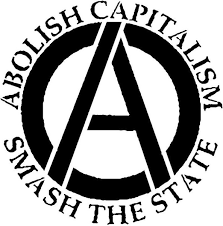 Anarchists fight for a communist society,
but they believe that the state should be dissolved (in other words
fully democratized) immediately after the revolution succeeds in toppling the previous regime (or very soon after). Anarchists will very often point to repression in really existing socialist societies (like the USSR or Revolutionary Cuba) as evidence that the state is dangerous to keep around, even in the hands of leftists.
Anarchists fight for a communist society,
but they believe that the state should be dissolved (in other words
fully democratized) immediately after the revolution succeeds in toppling the previous regime (or very soon after). Anarchists will very often point to repression in really existing socialist societies (like the USSR or Revolutionary Cuba) as evidence that the state is dangerous to keep around, even in the hands of leftists.
Many communists will point to the few instances where revolutionary anarchism has taken place (the Paris Commune, the Spanish Revolution, parts of the Russian Revolution) and talk about their inability to defend themselves against attack, something anarchists often agree with and have worked on solving.
Communists, on the other hand, usually fall somewhere near the idea of having a "dictatorship of the proletariat" to transition from a capitalist state, through a socialist state, and into a communist lack of state. While that term sounds scary (with the word "dictatorship" conjuring visions of the worst assumptions about communism), it merely means that the government should be under the control of working people, a democracy for and by them, to complete tasks that lay can the groundwork for communism. A dictatorship of the proletariat is considered socialist, because there is still a state and probably some leftover class divisions, but the economy is placed under democratic control of the workers.
Compromise on "the State" for Unity or Not?
There are other, less general philosophies on the radical left (left communism, council communism, anarcho-syndicalism, and others) which meet somewhere in the middle between the enormous labels of communist and anarchist, and they typically have positions on the state which seems a little communist for an anarchist and a little anarchist for a communist.
That being said, some radical leftists consider the differences between anarchists and communists to be too great, making unity on the radical left impossible. Indeed, some revolutions and conflicts have seen anarchists and communists fighting each other (a fun fact to enliven any Left Unity group meeting).
Still others are optimistic and see a lot of good to be learned from both sides and believe that any mass movement will require the best of both to succeed (only to be called a Stalinist by anarchist comrades and a liberal by communist comrades).

Why Is the State Important to the Radical Left?
This question about the state and what to do with it after seizing power defines the split between anarchists and communists.
Many communists will point to the few instances where revolutionary anarchism has taken place (the Paris Commune, the Spanish Revolution, parts of the Russian Revolution) and talk about their inability to defend themselves against attack, something anarchists often agree with and have worked on solving.
Communists, on the other hand, usually fall somewhere near the idea of having a "dictatorship of the proletariat" to transition from a capitalist state, through a socialist state, and into a communist lack of state. While that term sounds scary (with the word "dictatorship" conjuring visions of the worst assumptions about communism), it merely means that the government should be under the control of working people, a democracy for and by them, to complete tasks that lay can the groundwork for communism. A dictatorship of the proletariat is considered socialist, because there is still a state and probably some leftover class divisions, but the economy is placed under democratic control of the workers.
In striving for socialism, however, we are convinced that it will develop into communism and, therefore, that the need for violence against people in general, for the subordination of one man to another, and of one section of the population to another, will vanish altogether since people will become accustomed to observing the elementary conditions of social life without violence and without subordination. -- Vladimir Lenin, The State and Revolution
Compromise on "the State" for Unity or Not?
There are other, less general philosophies on the radical left (left communism, council communism, anarcho-syndicalism, and others) which meet somewhere in the middle between the enormous labels of communist and anarchist, and they typically have positions on the state which seems a little communist for an anarchist and a little anarchist for a communist.
That being said, some radical leftists consider the differences between anarchists and communists to be too great, making unity on the radical left impossible. Indeed, some revolutions and conflicts have seen anarchists and communists fighting each other (a fun fact to enliven any Left Unity group meeting).
Still others are optimistic and see a lot of good to be learned from both sides and believe that any mass movement will require the best of both to succeed (only to be called a Stalinist by anarchist comrades and a liberal by communist comrades).
What Do Radical Leftists Mean By Class?
 What Is Class to the Radical Left?
A "class" is a group of people who have similar roles in the workplace, specifically in creating valuable goods.
How Is This Informative?
On the radical left, the word "class" isn't discussed in the same gradual levels, the way many people talk about economic classes. We don't typically think about classes like "lower class," "lower middle class," "middle class," and so on. Almost all radical leftists define classes in capitalism (our main focus of study) in two groups called the "proletariat" (the hip word for workers, most likely your class) and the "bourgeoisie" (the soft-g and the vowel crowded word for bosses).
The Bourgeoisie (not borg-ee-oh-ee-see, in case you're having problems)
The bourgeoisie are said to own the "means of production" under capitalism. That means that individuals, by purchasing or inheriting, come to control the things that, when a worker runs the equipment or station, produce value and wealth (factories, restaurants, construction companies, etc.)
The term "bourgeois" can be confusing beyond pronunciation because it is another term with a specific meaning from the left and a looser definition otherwise. The word comes from a group of middle class merchants under feudalism who started the revolution of capitalism (first in Britain with the factory system). After the series of political revolutions that ousted Kings and weakened aristocracies, the bourgeois state became established in its few forms, favoring the republican model in the West. So, in capitalism, the bourgeois are the wealthiest and most powerful.
Note: many (usually non-leftists) use "bourgeois" as a term for uncultivated taste (from the mouths of aristocrats who were forever dumbfounded by the way these capitalist spent their new wealth).
Suffering engenders passion; and while the prosperous blind themselves, or go to sleep, the hatred of the unfortunate classes kindles its torch at some sullen or ill-constituted mind, which is dreaming in a corner, and sets to work to examine society. The examination of hatred is a terrible thing. -- Victor Hugo, Les MisérablesSo Who Are the Proletariat? Why Are They so Special?
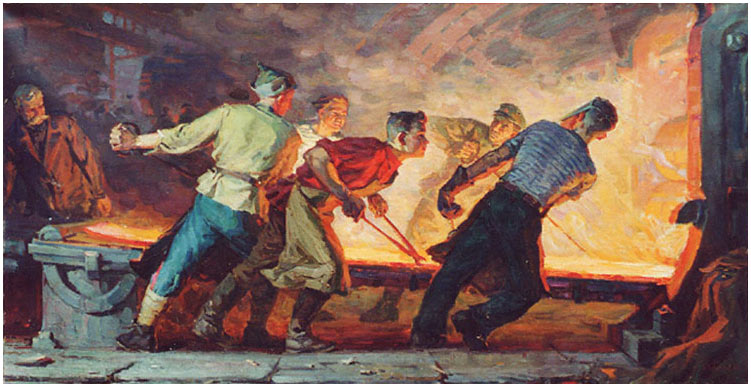
Probably you. Proletarians are generally defined as people who have to sell their labor to gain money in capitalism. The radical left thinks that since the proletariat makes all of the value and does all of the work, they shouldn't be dictated to by any boss (certainly not one that the workers didn't elect and who the workers can't recall at any time). Often times, fear of losing your job keeps people in line, as most people couldn't imagine how they would afford missing out on a single week's paycheck.
Bosses make more money by paying workers less, so that most workers get paid just enough to come back into work to make the boss more profit. One of the things pointed out in the Communist Manifesto, however, is that capitalism is building the foundation of its own demise. Wealth concentrates through buyouts and acquisitions and closures, shrinking the amount of people that own the businesses. The number people who work for a living increases as fewer and fewer people own private property, and the workers benefit from a change in society where they are put in charge of the lives and workplaces and governments.
I Can Think of People Who Aren't Either Bourgeois or Proletarian
It is important to remember that very few radical leftists believe that economies are as simple as workers and bosses. Every day, situations change. What is important for leftists are class interests, because the different ways you interact with the economy and government, the different policies you'll support in both. Many people don't work in factories but still share class interests with factory workers. Underpaid teachers, custodians, drivers, etc. are all often seen as proletarian on the radical left.
Sometimes, other terms are used (like "lumpenproletariat," “labor aristocracy,” and "petit-bourgeoisie" among others) to define a position in capitalism more finely, but “proletariat” and “bourgeoisie” are seen as the most important for understanding how capitalism works and are also perhaps the only universal class terms on the radical left.
There Is Always an Exception
There are some people that don't emphasize classic working class proletarians as the revolution base (either generally or in a particular place and time). These arguments are highly charged on the left and break with an argument for revolution that has permeated the radical left since it began.
Regardless, few would seriously argue that strictly proletarians can revolt and lead alone. For example, indigenous populations in Central and South America (the EZLN, the election of Chavez, etc.) have been crucial members of radical left and broad left coalitions for fighting capitalism and building a more equal, safe, and healthy society.
What Do Radical Leftists Mean By Private Property? (and why do you want to abolish it?)
What Is Private Property to the Radical Left?
 The radical left uses the words "private property" to describe ownership of the economy under capitalism. Let's break down the words for simplicity, in reverse order for clarity.
Property: anything that can combine raw material and labor to create value or the raw material itself.
Private: owned by individuals or small groups of owners who have final say in how the property is used (within the law, most of the time) without any means of recourse for the workers or affected communities (again, as long as activity is within the law or the bribes came early and often).
To be a radical leftist means seeking to abolish private property as defined above.
Wait, What? Abolish Property? I Don't Want to Share Everything
So you can stop worrying about sharing your toilet paper with anyone who asks (although it rarely comes up, takes a second, and it's the right thing to do).
But This Boss Earned His Way
Many people who own businesses, especially ones they built themselves, have worked incredibly hard to succeed. No doubt. No question. When radical leftists argue that business owners exploit workers, business owners sometimes think we dismiss the work they had to do. We don't. Many people have met or had bosses that worked alongside employees, sometimes harder or longer. So how can we still believe in abolishing private property?
Hard work does not mean you can disregard the workers. People have to make money to eat and house and take care of themselves and their dependents, and people rarely have the wealth or opportunity to start a successful business. So workers give a set amount of labor, they are always paid back less and usually just enough to make by or worse. And no matter how difficult financing a start-up or finding talented workers or finally paying off all the debt was, no one has the right to pollute without seeking consent of anybody, and leaving communities to clean up, if they are lucky enough to be able to, the mess of the private property owner.
How, When, and in What Order Are We Abolishing?
The radical left thinks a government cannot be democratic when a small minority can control society with enormous wealth. Private property leads to the inevitable gap between rich and poor in capitalism, and that means in leads to the lack of democracy in society. So the radical left all agrees we should abolish private property, but we don't all agree on how to abolish private property, at what point during the revolution, and in what order.
As for how to abolish private property, everything has been done from union's running out the bosses and running the factories themselves, using governments to start land reform, gift economies, command economies, etc.
 Some people seek to experience life without private property right now. Squatters fix up abandoned buildings and live for free, some people start collectively ran enterprises. For most people, though, such adventures are romantic but do not fix the problem for everyone. The Bolsheviks pursued worker direct democracy (in units called Soviets) during and just after the Russian Revolution before pursuing state management and ownership.
And, of course, there is the issue of order. As you can imagine, many radical leftists would love to see private property abolished and democratized all at once and as fast as possible. Other ideas have been put forward, though, such as seizing only the major bulwarks of the economy, allowing consumer goods, artisan shops, and the like to exist in a market while the government controls the largest parts. Many actual revolutions of the radical left begin with land reform along with a gradual increase in social services before collectivizing (sometimes forced, sometimes voluntarily) other sectors.
Property Is Not Your Comrade, We Are!

Property: anything that can combine raw material and labor to create value or the raw material itself.
Private: owned by individuals or small groups of owners who have final say in how the property is used (within the law, most of the time) without any means of recourse for the workers or affected communities (again, as long as activity is within the law or the bribes came early and often).
To be a radical leftist means seeking to abolish private property as defined above.
Wait, What? Abolish Property? I Don't Want to Share Everything
The proletarian liberates himself by abolishing competition, private property, and all class differences. -- Frederick Engels, The Principles of CommunismMost people think of personal possessions when they hear the phrase "private property" (in their defense, that seems like what those two words should mean stuck together). So when you hear us say, “Abolish private property!” we mean let's let the workers run their own affairs democratically with input and collaboration with the community. Deciding together, and even electing their own leaders and managers if they see fit.
So you can stop worrying about sharing your toilet paper with anyone who asks (although it rarely comes up, takes a second, and it's the right thing to do).
But This Boss Earned His Way
Many people who own businesses, especially ones they built themselves, have worked incredibly hard to succeed. No doubt. No question. When radical leftists argue that business owners exploit workers, business owners sometimes think we dismiss the work they had to do. We don't. Many people have met or had bosses that worked alongside employees, sometimes harder or longer. So how can we still believe in abolishing private property?
Hard work does not mean you can disregard the workers. People have to make money to eat and house and take care of themselves and their dependents, and people rarely have the wealth or opportunity to start a successful business. So workers give a set amount of labor, they are always paid back less and usually just enough to make by or worse. And no matter how difficult financing a start-up or finding talented workers or finally paying off all the debt was, no one has the right to pollute without seeking consent of anybody, and leaving communities to clean up, if they are lucky enough to be able to, the mess of the private property owner.
How, When, and in What Order Are We Abolishing?
The radical left thinks a government cannot be democratic when a small minority can control society with enormous wealth. Private property leads to the inevitable gap between rich and poor in capitalism, and that means in leads to the lack of democracy in society. So the radical left all agrees we should abolish private property, but we don't all agree on how to abolish private property, at what point during the revolution, and in what order.
As for how to abolish private property, everything has been done from union's running out the bosses and running the factories themselves, using governments to start land reform, gift economies, command economies, etc.

And, of course, there is the issue of order. As you can imagine, many radical leftists would love to see private property abolished and democratized all at once and as fast as possible. Other ideas have been put forward, though, such as seizing only the major bulwarks of the economy, allowing consumer goods, artisan shops, and the like to exist in a market while the government controls the largest parts. Many actual revolutions of the radical left begin with land reform along with a gradual increase in social services before collectivizing (sometimes forced, sometimes voluntarily) other sectors.
Property Is Not Your Comrade, We Are!
Property is theft! -- Pierre-Joseph Proudhon, What is Property?"Abolish private property!" and the always popular (above mentioned) "Property is theft!" call against the rich controlling society and their employees as dictators.
Subscribe to:
Posts (Atom)